Quick Answer: Standard garage floors crack and stain under heavy vehicles and tools. Professional concrete floor coatings for garages provide the durability, chemical resistance, and load-bearing strength needed to protect your investment—and your floor—for years to come.
Key Takeaways
- Heavy vehicles and equipment place extreme stress on untreated concrete, accelerating cracking, staining, and surface degradation.
- Concrete floor coatings for garages such as polyurea and epoxy dramatically extend floor life by adding impact resistance, chemical protection, and structural reinforcement.
- Hiring a professional garage floor coating contractor in Jacksonville, FL ensures proper surface preparation and application—the two factors that determine how long your coating lasts.
If your garage doubles as a workshop, a storage bay for heavy machinery, or a home to a diesel truck, your floor is taking a serious beating. Untreated concrete might look solid, but it's actually porous and brittle under repeated stress. Over time, heavy vehicles cause micro-fractures. Tool drops leave chips. Oil, hydraulic fluid, and road chemicals seep in and weaken the surface from the inside out.
The good news? The right floor coating transforms a standard concrete slab into a surface that can genuinely handle the load. This post breaks down what makes garage coatings essential for heavy-use environments, which coating types perform best, and what to look for when hiring a garage floor coating contractor in Jacksonville, FL.
Why Untreated Concrete Struggles Under Heavy Loads
Concrete is strong in compression, but not invincible. A standard residential garage slab typically measures 4 inches thick—adequate for a sedan, but strained by anything heavier. Add a lifted truck, an RV, or a loaded trailer, and the repeated stress begins to show.
Heavy equipment also creates point loads. A floor jack, a hydraulic lift, or a stationary workbench with hundreds of pounds of tools concentrate weight into a small area. This accelerates surface wear and can cause spalling—where the top layer of concrete flakes off.
Then there's contamination. Garages used for mechanical work are constantly exposed to motor oil, transmission fluid, antifreeze, and rust. These substances don't just stain; they chemically degrade concrete over time, making it softer and more susceptible to cracking.
An uncoated floor in a heavy-use garage isn't a neutral surface—it's one that's slowly deteriorating.
What Do Concrete Floor Coatings for Garages Actually Do?
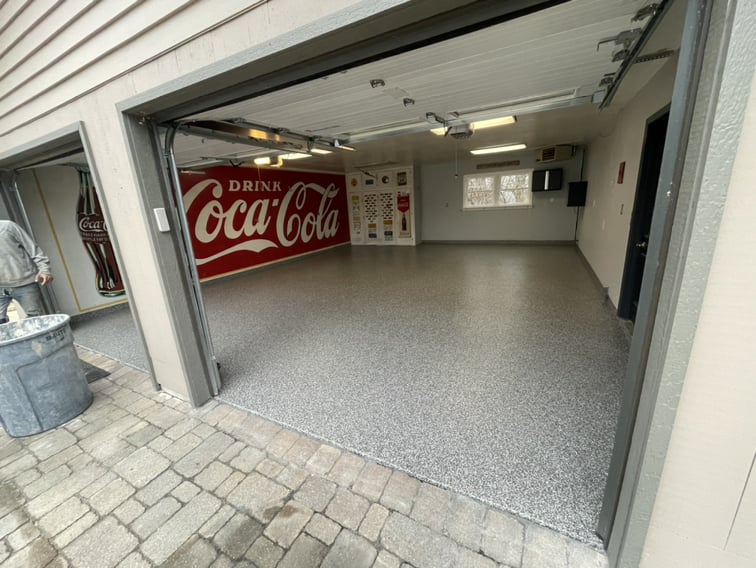
A quality floor coating bonds to the surface of your concrete and adds a protective layer that resists the specific stresses of a working garage. Here's what that looks like in practice:
- Impact resistance: Coatings absorb shock from dropped tools and equipment, reducing chipping and cracking.
- Chemical resistance: Sealed surfaces prevent oil, fuel, and solvents from penetrating the concrete.
- Load distribution: Rigid coatings spread weight more evenly across the slab, reducing point-load stress.
- Moisture barrier: Coatings block moisture vapor from rising through the slab, which can otherwise cause delamination and mold.
- Slip resistance: Textured finishes improve traction even when the floor is wet or oily—critical in a working garage.
These aren't cosmetic improvements. They're structural ones.
Which Coating Type Is Best for Heavy Vehicle and Tool Use?
Not all garage coatings are equal. For heavy-use environments, two options consistently outperform the rest.
Polyurea Coatings
Polyurea is the premium choice for garages under serious stress. It cures faster than epoxy, bonds more flexibly to the concrete, and offers superior resistance to abrasion and temperature fluctuations. Polyurea coatings are also UV-stable, meaning they won't yellow or fade in garages with natural light exposure.
For heavy vehicles—trucks, SUVs, trailers—polyurea's flexibility is a major advantage. It moves slightly with the concrete as temperatures change, rather than cracking under thermal stress.
Epoxy Coatings
Epoxy remains one of the most widely used concrete floor coatings for garages because of its hardness and chemical resistance. A properly applied two-part epoxy system creates an extremely dense surface that holds up well under stationary loads and heavy foot traffic.
The main consideration with epoxy is that it requires meticulous surface preparation. If the concrete isn't properly ground and profiled before application, epoxy can peel—especially in high-moisture environments like Florida garages.
Which Should You Choose?
Choose polyurea if your garage sees heavy rolling loads, wide temperature swings, or direct sunlight. Choose epoxy if you're primarily concerned with chemical resistance and static equipment weight, and your concrete is in solid condition. Many professional installers use a combination—an epoxy base coat for adhesion and chemical protection, topped with a polyurea finish coat for durability and appearance.
How Surface Preparation Determines Coating Performance
This is the part most DIY applications get wrong. The coating itself is only as good as what it's bonded to.
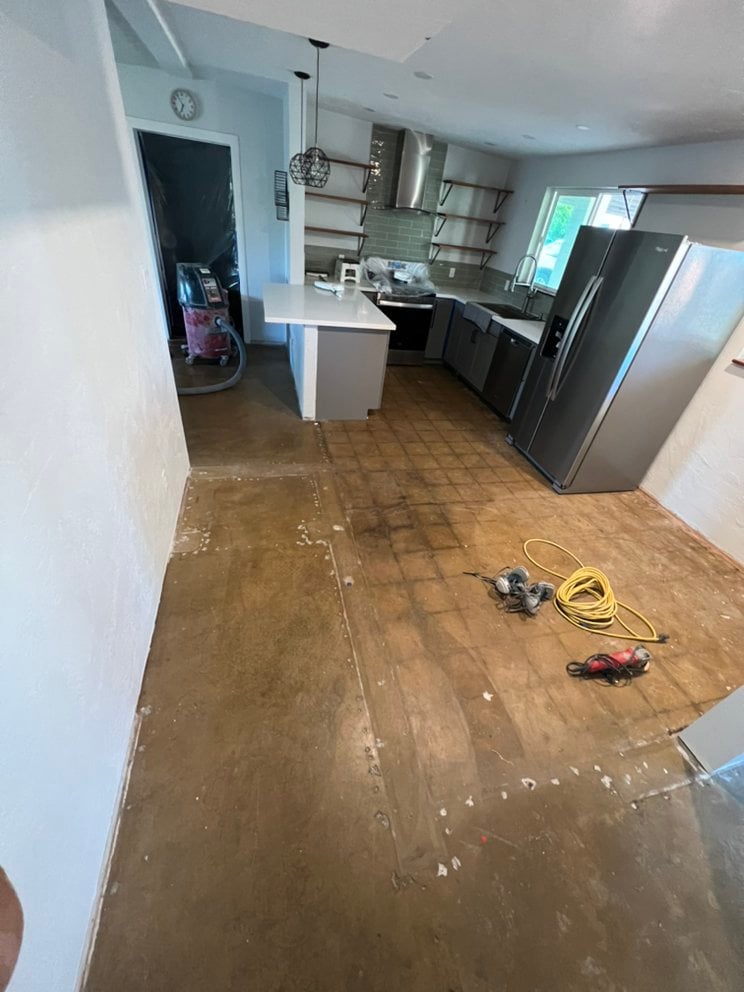
Professional contractors use diamond grinding or shot blasting to open the concrete's pores before applying any coating. This creates a mechanical profile—a rough texture at the microscopic level—that allows the coating to grip the surface rather than simply sit on top of it.
Without proper preparation, even high-end coatings will peel within months under heavy loads. It's the most common reason garage floor coatings fail prematurely.
A reputable garage floor coating contractor in Jacksonville, FL will always begin with a moisture test and surface profile assessment before recommending a system. If a contractor skips this step or doesn't mention it, that's a red flag.
What to Look for in a Garage Floor Coating Contractor in Jacksonville, FL
Jacksonville's climate adds a layer of complexity to floor coating projects. High humidity, warm temperatures year-round, and occasional flooding mean moisture management is critical. Here's what to look for when evaluating contractors:
- Experience with concrete preparation: Ask specifically how they prep the surface. Diamond grinding is the industry standard.
- Product transparency: A reliable contractor will tell you exactly which products they use and why.
- Warranty coverage: Look for warranties that cover both the product and the labor. Most professional-grade systems carry multi-year warranties.
- Local knowledge: A contractor familiar with Jacksonville's climate will know how to account for moisture vapor in Florida slabs—a common issue that affects adhesion.
Flagler Concrete Coatings specializes in high-performance concrete floor coatings for garages across Jacksonville and the surrounding area. The team brings professional-grade surface preparation and proven coating systems to every project, whether it's a home workshop or a commercial bay.
How Long Does a Garage Floor Coating Last in a Heavy-Use Environment?
With professional installation and proper surface preparation, polyurea and epoxy systems typically last 10 to 20 years in residential garages—even under heavy use. Maintenance is minimal: regular sweeping and occasional mopping with a pH-neutral cleaner is usually all that's needed.
Exposure to prolonged standing moisture, point impacts from sharp objects, or years without any cleaning can reduce coating life. But in most cases, a professionally applied coating outlasts the vehicles parked on it.
Protect Your Floor Before the Damage Compounds
Concrete damage is cumulative. A small crack ignored today becomes a structural problem in three years. A stain that soaks in today becomes permanent. The longer a heavy-use garage floor goes uncoated, the more expensive the repair—and in some cases, the floor may need patching or full resurfacing before any coating can be applied.
The most cost-effective time to coat your garage floor is before the damage sets in. The second best time is now.
If you're ready to protect your garage floor from heavy vehicles, tools, and the Florida elements, contact Flagler Concrete Coatings for a professional assessment and free quote.
Frequently Asked Questions
Are concrete floor coatings for garages strong enough to support a lifted truck or RV?
Yes. Professional-grade polyurea and epoxy coatings are engineered to handle the load requirements of heavy vehicles, including lifted trucks, SUVs, and trailers. The key is proper surface preparation and using a coating system rated for the expected load. A professional contractor will assess your slab and recommend the appropriate system.
How long does it take to install a garage floor coating?
Most residential garage floor coating projects take one to two days. Polyurea systems cure quickly—often within 24 hours—while epoxy systems may require 48 to 72 hours before the floor can accept vehicle traffic. Your contractor will provide a specific timeline based on the coating system and garage size.
Can a garage floor coating be applied to a cracked or damaged concrete slab?
Minor cracks and surface damage can typically be repaired before coating. Contractors fill cracks and grind down high spots as part of the preparation process. Severely damaged slabs may require more extensive repair work first. A professional assessment will determine what prep work is needed before any coating is applied.
Is a DIY garage floor coating kit a good option for heavy-use garages?
DIY kits are generally not recommended for garages used by heavy vehicles or serious workshop activity. Consumer-grade products have lower chemical resistance and durability than professional systems, and most DIY applications skip the mechanical surface preparation that determines long-term adhesion. For a heavy-use environment, professional installation delivers significantly better results and longevity.
Why is Jacksonville's climate a concern for garage floor coatings?
Florida's high humidity means concrete slabs often contain elevated moisture vapor. If this moisture isn't accounted for before coating, it can cause bubbling, delamination, and premature failure. Experienced garage floor coating contractors in Jacksonville, FL perform moisture tests and use vapor-compatible products to prevent these issues.