Quick answer: Garage floor coatings make winter cleaning easier by creating a sealed, non-porous surface that resists salt, slush, moisture, and stains. Instead of scrubbing stubborn spots off bare concrete, you can wipe or mop the mess away in minutes—keeping your garage cleaner all season long.
Winter is tough on garage floors. Between road salt, melting snow, and muddy tire tracks, bare concrete quickly turns into a stained, gritty mess. If you dread the seasonal cleanup, you're not alone.
The good news? A quality coating can change how your garage handles the coldest months of the year. In this post, we'll explain how garage floor coatings protect your space, cut your cleaning time, and hold up against everything winter throws at them. If you're considering garage floor coatings in Waycross GA, here's what you need to know before the temperature drops.
Key Takeaways
- A sealed surface repels winter grime. Coated floors resist salt, slush, and stains, so cleanup takes minutes instead of hours.
- Coatings protect concrete from long-term damage. They block moisture and chemicals that cause cracking, pitting, and discoloration.
- The right coating saves you time and money. A durable finish means less scrubbing, fewer repairs, and a garage that looks great year-round.
Why is winter so hard on bare concrete floors?
Bare concrete is porous. That means it soaks up whatever lands on it—including the salty, slushy water that drips off your car all winter.
Road salt is especially damaging. As snow and ice melt off your tires, the salty runoff seeps into the concrete. Over time, this leads to pitting, surface flaking, and discoloration. Add repeated freeze-thaw cycles, and small cracks can grow into bigger structural problems.
Then there's the cleaning struggle. Mud, oil, and grime settle deep into the pores of untreated concrete. Scrubbing them out takes serious effort, and some stains never fully lift.
How do garage floor coatings make winter cleaning easier?
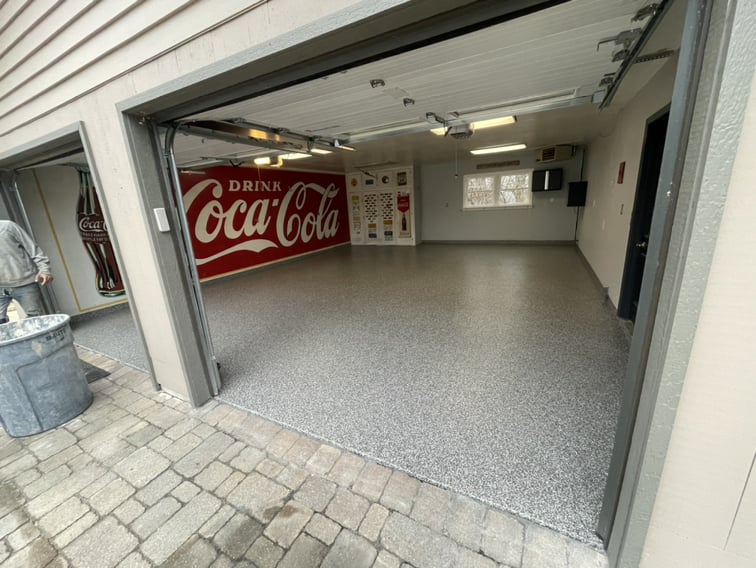
Garage floor coatings seal your concrete with a smooth, non-porous layer. Nothing soaks in, so messes stay on the surface where you can easily remove them.
Here's what that means for your winter routine:
Spills and slush wipe away fast
Salt residue, melted snow, and muddy footprints sit on top of the coating instead of sinking in. A quick mop or a wipe with a damp cloth clears them up. No harsh scrubbing required.
Stains don't stick
Oil drips, road grime, and chemical spills can't penetrate a sealed floor. That means no permanent dark spots and no lingering odors from soaked-in fluids.
One tool does the job
For most winter messes, a mop, a squeegee, or a garden hose is all you need. You can skip the pressure washer and the heavy-duty degreasers you'd need for bare concrete.
Do coatings protect concrete beyond just cleaning?
Yes. Easier cleaning is only part of the benefit. Coatings also defend your floor against the damage that winter causes.
A sealed surface blocks moisture, so water can't seep in and freeze inside the concrete. This helps prevent the cracking and pitting that shorten a floor's lifespan. Coatings also resist the salt and chemicals that eat away at untreated slabs.
The result is a floor that stays structurally sound and looks new for years. For homeowners in colder climates, that protection often pays for itself by delaying costly concrete repairs.
Which garage floor coating is best for winter conditions?
Not all coatings perform the same. Here's how to choose based on what matters most to you:
- Choose an epoxy coating if you want a strong, budget-friendly option that resists stains and chemicals. It's a solid all-around pick for most garages.
- Choose a polyaspartic or polyurea coating if durability and temperature resistance are your top priorities. These finishes cure fast, handle freeze-thaw cycles well, and stand up to heavy traffic.
- Add an anti-slip additive if winter safety is a concern. Wet, snowy boots can make smooth floors slippery, and a textured finish helps prevent falls.
For the best results, professional installation matters. A proper surface prep and cure ensures the coating bonds correctly and lasts through many winters.
Is a garage floor coating worth it for a Waycross winter?
Even in milder Southern winters, garages take a beating from moisture, mud, and the occasional cold snap. Garage floor coatings in Waycross GA protect against humidity, rain runoff, and everyday wear that bare concrete simply can't handle.
A coated floor keeps your space cleaner, safer, and more valuable—no matter how harsh the season gets. It's a one-time upgrade that pays off every time you skip a long scrubbing session.
Make winter cleanup the easy part of your season
A stained, gritty garage floor doesn't have to be part of your winter. With the right coating, cleanup becomes a quick, simple task instead of a weekend chore.
If you're ready to protect your concrete and cut your cleaning time, the team at Flagler Concrete Coatings can help. Reach out for a consultation and find the perfect finish for your garage before winter arrives.
Frequently Asked Questions
How long does a garage floor coating take to install?
Most professional installations take one to two days, depending on the size of your garage and the type of coating. Polyaspartic and polyurea coatings cure faster, often allowing you to use your garage within 24 hours.
Will a coating make my garage floor slippery in winter?
A smooth coating can get slick when wet, but adding an anti-slip additive solves this. The textured finish provides traction, even with snowy or wet boots.
How much do garage floor coatings cost?
Cost depends on your garage size, the coating type, and prep work needed. Epoxy is typically the most budget-friendly, while polyaspartic and polyurea cost more but offer greater durability. A professional consultation gives you an accurate quote.
Can garage floor coatings be applied in cold weather?
Yes, but temperature affects curing. Professionals adjust the product and process for colder conditions. Polyaspartic coatings are especially good for cold-weather application because they cure quickly across a wide temperature range.
How long do garage floor coatings last?
With proper installation and care, quality coatings can last 10 to 20 years. Polyaspartic and polyurea finishes tend to outlast standard epoxy, especially in high-traffic or harsh-weather garages.